Part of Love, LLMs, RobotsSeptember 21–27, 2026

Will LLMs pass
Polish matura?

One week of learning how to train small models, followed by a weekend of hacking.

Tue 22 – Fri 25 Sep

3 workshops

Three hands-on workshops: model training from scratch, reinforcement learning in robots and building harnesses.

Fri 25 – Sun 27 Sep

46-hour hackathon

Teams take any open model with weights up to 8 GB on disk, teach it Polish history and sit the matura live on Sunday.

Title sponsorJetBrains
PartnersQuesmaSMOK VenturesBADideas.fund

01·The week

Can you learn to train models in a week?

Warsaw Model Trainers is a full week of events in one place, run by AI Tinkerers and Kolektyw3. Tuesday to Friday afternoon you learn how to make the best out of a small model — either by fine-tuning or building harnesses around it. From Friday evening you do it yourself.

We work with models up to a few gigabytes, including the Polish Bielik and PLLuM. That scale lets anyone test their skills — no background in programming or model training required, and no heavy hardware either.

7
days in one place
4
workshops and meetups
46h
of hackathon
2
tracks to enter
Working on frontier models is one thing. The future is small, custom models: cheaper, and specialised in your field. All of us have to learn to train them for our own needs. That is what this hackathon is about.

02·The task

One task — pass the Polish history matura

  1. Step 1

    Pick any open model with downloadable weights up to 8 GB on disk — quantized is fine (e.g. Bielik, PLLuM, Qwen, Gemma, Llama).

  2. Step 2

    Train it (fine-tuning, LoRA), wrap it in a harness (RAG, prompts, agent, tools) — or both.

  3. Step 3

    You submit two models: the untouched base model (your benchmark) and your trained one. Progress = the difference.

Scoring: 40% final exam score, 40% progress over your benchmark (both automatic), 20% presentation (jury).

Final presentation on Sunday: your score on the final exam sheet appears on screen, then 2–3 min on the problems you hit while training, 1–2 min of jury questions.

During the exam: no internet, no closed APIs (GPT, Claude, Gemini) — the model answers on its own.

Prizes

Main prize

PLN 8,000 (funded by Kolektyw3) + $200 in Cursor credits per winning team member.

Every participant

$200 in Cursor credits for the hackathon.

Quesma special prizes

Tokenmaxxer (most tokens used, in API-equivalent $) and Token diversity (most different models used for vibecoding).

03·The plan

Love, LLMs, Robots

This week Warsaw becomes the capital of training — models and robots. Together with Alien Bazaar we’re bringing you a week full of advanced tech events, meetings with curious minds and opportunity to meet fellow builders.

Week · learn

  • TUE ·18:00

    Builders & Brews × Nebius

    Evening meetup with the Nebius team.

    Sign up
  • WED ·18:00

    Model training workshop

    Piotr Migdał and Ania Olchowik.

    Sign up
  • THU ·18:00

    Reinforcement learning in robotics

    Bartek Kolasa and Michał Pogoda-Rosikon.

    Sign up
  • FRI ·15:00

    Harness-building workshop

    Tomasz Kolinko and Anna Kubasiak. Straight before the kick-off.

    Sign up

Weekend · build

  • FRI ·15:00

    Harness workshop + registration

    Last warm-up before the kick-off, and the moment to check in.

  • FRI ·18:00

    Hackathon kick-off

    Warsaw Model Trainers, with JetBrains and Quesma.

    Register
  • FRI ·20:25

    Team building

    Find your crew before the work starts.

  • FRI ·21:05

    Work starts, leaderboard opens

    46 hours on the clock.

  • FRI ·

    Alien Bazaar starts

    A robotics hackathon runs in parallel at Hacker Bloc, Kosiarzy 21B: teams build and program robots all weekend.

    Alien Bazaar
  • SAT ·12:00–18:00

    Mentor slots

    Book time with the mentors and debug your training runs.

  • SAT ·by 16:00

    Register your team lineup in the app

    Final team roster has to be in the hackathon app by 16:00.

  • SUN ·11:00

    Training stops, exams + presentations

    Models sit the matura live, then every team presents.

  • SUN ·13:00

    Panel: Builders vs. Enablers

    Moderated by Michał Parkoła.

  • SUN ·14:00

    Results & prizes

    Then the Smok × Badideas closing party until 22:00.

04·Experts

Who you will learn from

Workshop leads, mentors and judges — around all week.

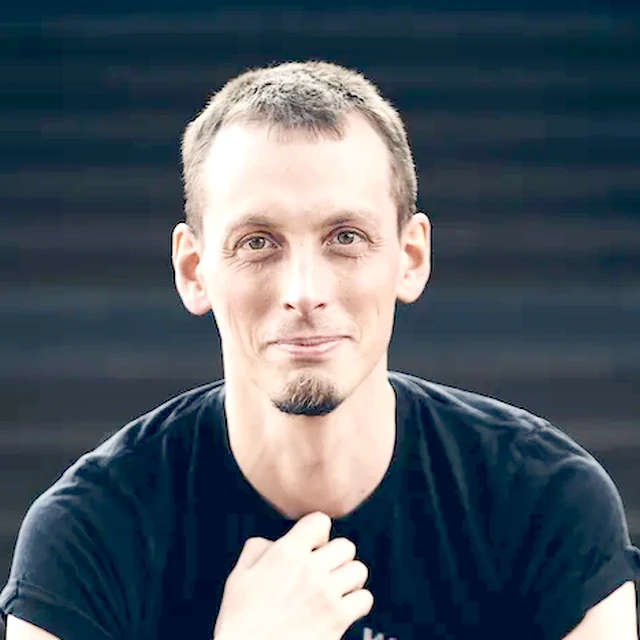
Anna Kubasiak

PhD, co-founder and Chief AI Architect at Aladdin/ai, where she designs practical AI agents and automation systems for business operations. Combines a background in quantum physics and deep tech with experience as a Microsoft AI specialist and earlier data science and technology strategy roles at Accenture and Deloitte. Her work focuses on moving AI from demos into reliable workflows: harnesses, evaluation loops, guardrails, integrations and human-in-the-loop systems.

Anna Kubasiak

Aladdin/ai

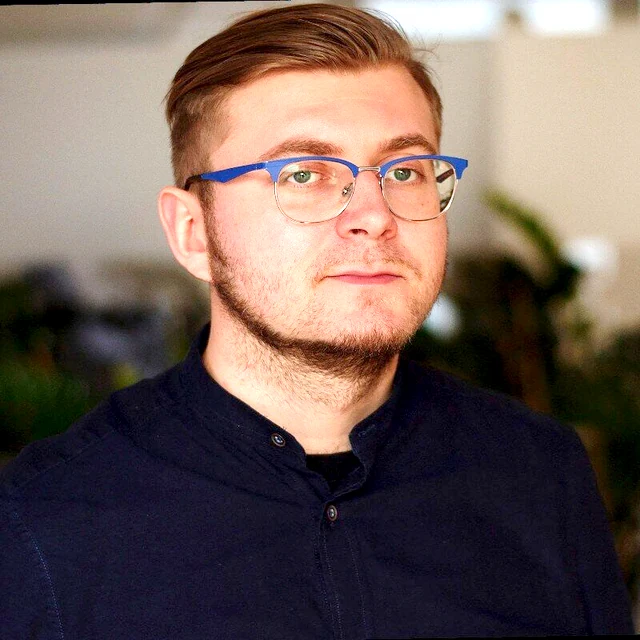
Ania Olchowik

AI engineer working in game development, with a background in AI for drug discovery. She also taught programming at coding bootcamps, where she helped dozens of people ship their first real projects.

Ania Olchowik

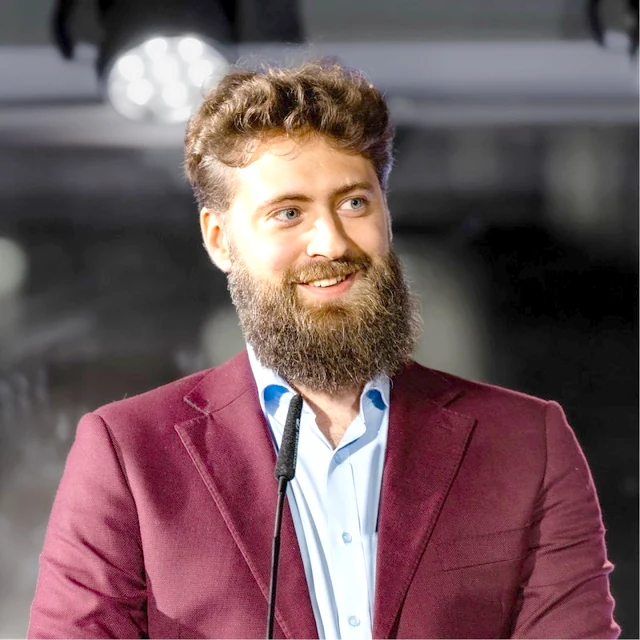
Gleb Badzeika

ML engineer on the AI for Code team at JetBrains AI. International finalist of the World Robot Olympiad, and later mentor of the Belarusian national WRO team (2017–2022).

Gleb Badzeika

JetBrains AI

05·The place

Kolektyw3

Koszykowa 54, Warsaw

A curated space for builders, founders, and creative technologists working at the edge of web3, AI, and culture. Located in the heart of Warsaw.

Open in Google Maps

06·FAQ

Questions, answered

Is the hackathon free?

Yes. Participation, sponsor compute, food and the closing party are free.

How do I sign up?

Through Luma. We review applications and confirm by email. There are 60 places — your Luma confirmation is your ticket.

Who can take part?

Anyone who is 18+ on the last day of the hackathon, registered and confirmed on Luma, and on site in Warsaw — it's an in-person event, not hybrid.

Do I need a team?

No. Compete solo or in a team of up to 4. No team yet? Come to team building on Friday at 20:25. One person, one team.

When do I register my team?

In the app (warsawmodeltrainers.dev/matura) — the same one where you submit your project — by Saturday 16:00.

Do I need to know how to train models?

No. You can skip training and wrap a model in a harness (RAG, prompts, tools) instead. The Friday 15:00 workshop covers exactly that.

Which models can I use?

Any model with downloadable open weights, up to 12B parameters (e.g. Bielik, PLLuM, Qwen, Gemma, Llama).

How is progress measured?

You submit two models: the untouched base model (your benchmark) and your trained one. Progress is the difference between their scores. A small model with a big jump can beat a big model that stood still.

How is the result scored?

40% final exam score, 40% progress over your benchmark (both automatic), 20% presentation (jury).

What does the final presentation look like?

On Sunday from 11:00: your model's score on the final exam sheet appears on screen, then 2–3 minutes on the problems you hit while training and 1–2 minutes of jury questions. Polish or English.

Where do I get compute?

Nebius gives every participant a credit code, Labqoat puts $2,000 in credits split equally between teams, and Modal's free Starter plan adds $30 of compute a month. Your own GPUs are fine too.

Where do I get data? Can I use anything?

Any source is fine as long as you have legal access to it — including synthetic data from any LLM. Don't break paywalls or logins, don't put copyrighted material in your repo (link the sources and add a download script instead), and use models and datasets built from third-party content only for non-commercial purposes.

Do I have to open-source my project?

No. Everything you build — code, harness, prompts, tools — belongs to your team. Your repo can be private, as long as the organizers and the jury get read access before Sunday 11:00. You choose the licence.

What are the prizes?

Main prize: PLN 8,000 (funded by Kolektyw3) + $200 in Cursor credits per winning team member. Every participant also gets $200 in Cursor credits for the hackathon. Quesma adds two special prizes: Tokenmaxxer (most tokens used, in API-equivalent $) and Token diversity (most different models used for vibecoding).

Can I use closed APIs?

For generating training data — yes. During the final exam — no: the model answers on its own, with no internet and no closed APIs in the harness.

Do I have to stay all weekend?

No, but at least one team member must be at the exam on Sunday. The space closes at midnight — run overnight training remotely.

Where and when?

Kolektyw3, Koszykowa 54, 3rd floor, Warsaw. Fri 15:00–24:00, Sat 9:00–24:00, Sun 9:00–22:00. Breakfast, lunch, pizza and coffee included.

Will my details be shared?

After the event we share participants’ name and email with the sponsors (hiring, programmes, offers). Don’t want that? Email paulina@ethwarsaw.dev before the end of the hackathon.

Where do I ask questions?

Our Telegram group with organizers, sponsors and mentors: t.me/warsawmodeltrainers

Read the full rules

Bring a laptop. Leave with a model you trained yourself.

Sep 21–27, 2026 · Koszykowa 54, Warsaw

Register→